Nile Adventures: Ultimate Guide to Jinja White-Water Rafting
The Nile River, the world’s longest waterway, has captivated human imagination for millennia. Ancient civilizations rose along its banks, explorers died searching for its source, and empires fought for control of its life-giving waters. Yet for modern adventurers, one stretch of the Nile offers something entirely different: some of the most exhilarating white-water rafting on the planet.
In Jinja, Uganda, where the Nile begins its 6,650-kilometer journey from Lake Victoria to the Mediterranean Sea, the river transforms from placid lake outlet to churning whitewater chaos within just a few kilometers. This transformation has established Jinja as one of the world’s premier rafting destinations, drawing thrill-seekers from across the globe to test themselves against rapids with names like “The Bad Place,” “Vengeance,” and “Itanda Falls.”
The Source of Adventure
Jinja sits approximately 80 kilometers east of Uganda’s capital, Kampala, positioned at the point where Lake Victoria funnels into the Nile. For decades, this historic town served primarily as an industrial center and starting point for explorers seeking the Nile’s source. The completion of the Owen Falls Dam in 1954, and later the Bujagali Dam in 2012, altered the river’s character, submerging some rapids while creating new ones downstream.
Rather than diminishing Jinja’s rafting appeal, these changes concentrated the action. Today’s white water rafting section runs approximately 25 kilometers through a spectacular gorge, featuring continuous rapids ranging from gentle Class II ripples to thundering Class V monsters that demand respect, skill, and nerve. The river’s warm tropical waters, consistent year-round flow, and relatively stable weather make it accessible even to first-time rafters willing to embrace the challenge. Any comprehensive Jinja tour should include this rafting experience, as it represents the town’s most iconic adventure activity.
Understanding the Rapids
White-water rapids are classified on an international scale from Class I (easy, minimal waves) to Class VI (unrunnable, near-certain death). Jinja’s Nile showcases the full spectrum of this scale, though most commercial rafting focuses on Class III to Class V sections that balance excitement with reasonable safety margins.
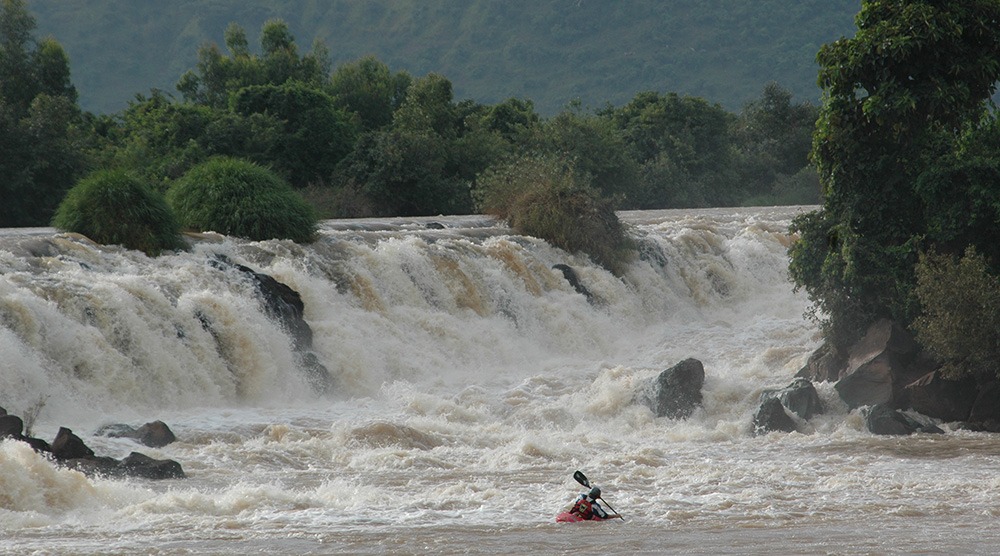
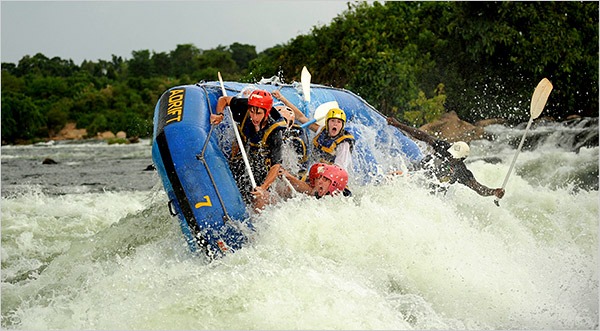
Class III rapids feature moderate, irregular waves and require precise maneuvering. They get your heart racing without overwhelming novices. Class IV rapids bring larger, more powerful waves, turbulent water, and consequences for mistakes. A flip here means swimming through serious whitewater, testing both physical fitness and mental composure. Class V rapids represent the apex of commercially raftable water: violent, chaotic, often featuring unavoidable waves and holes that can flip rafts, submerge swimmers, and demand every ounce of teamwork and technique.
The Nile delivers all of this within a single day. Rapids arrive in sequences separated by calm pools, creating a rhythm of adrenaline surges followed by recovery periods. This pacing allows rafters to build confidence progressively while providing regular opportunities to regroup, catch breath, and steel nerves for what’s ahead.
The Big Drops: Jinja’s Legendary Rapids
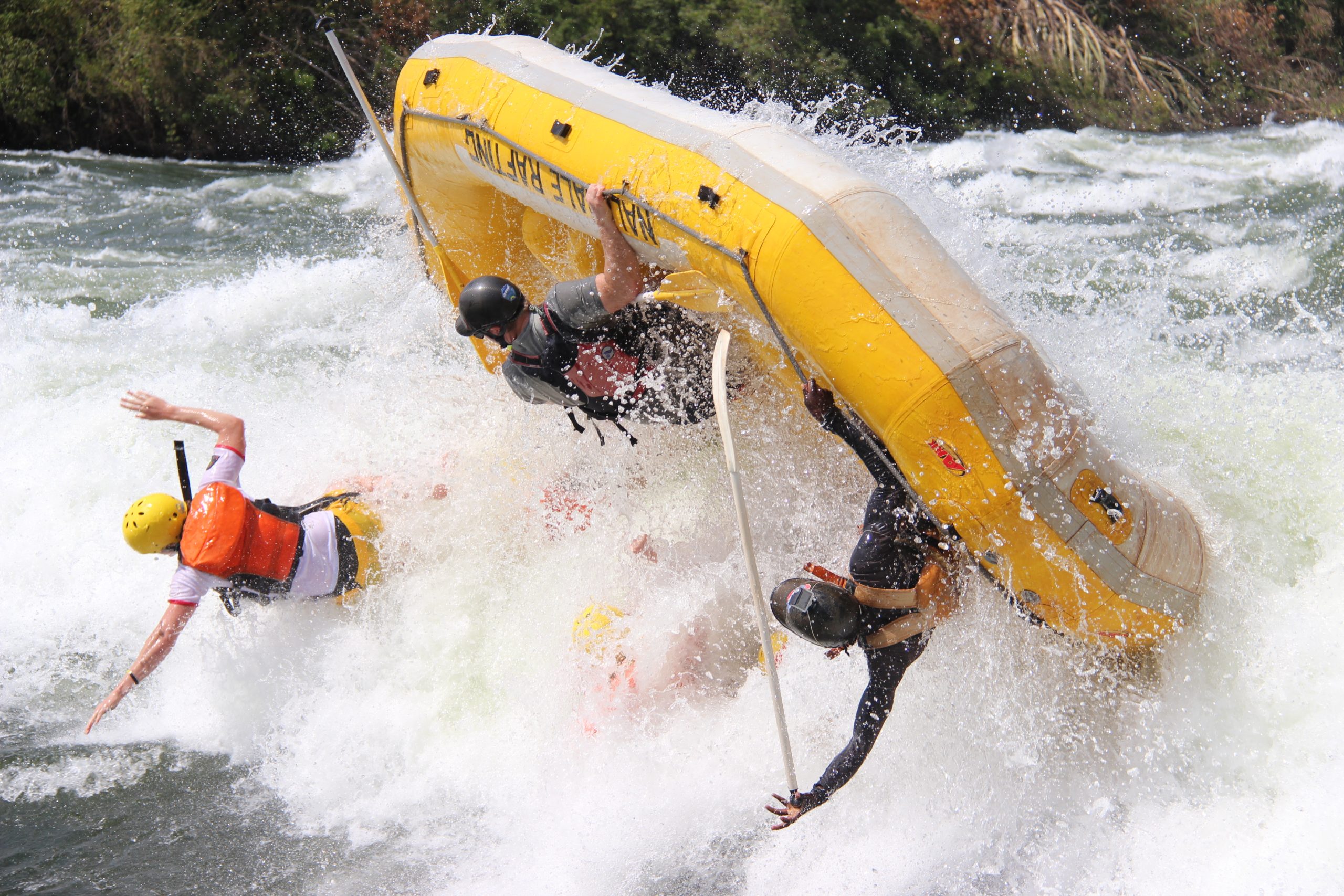
Certain rapids along the Jinja section have achieved legendary status among rafting enthusiasts. Itanda Falls, the grand finale of most full-day trips, presents a six-meter vertical drop that launches rafts airborne before crashing into a maelstrom of churning water below. Successfully navigating Itanda requires precise positioning, perfect timing, and substantial luck. Even experienced guides flip here regularly, making a clean run something to genuinely celebrate.
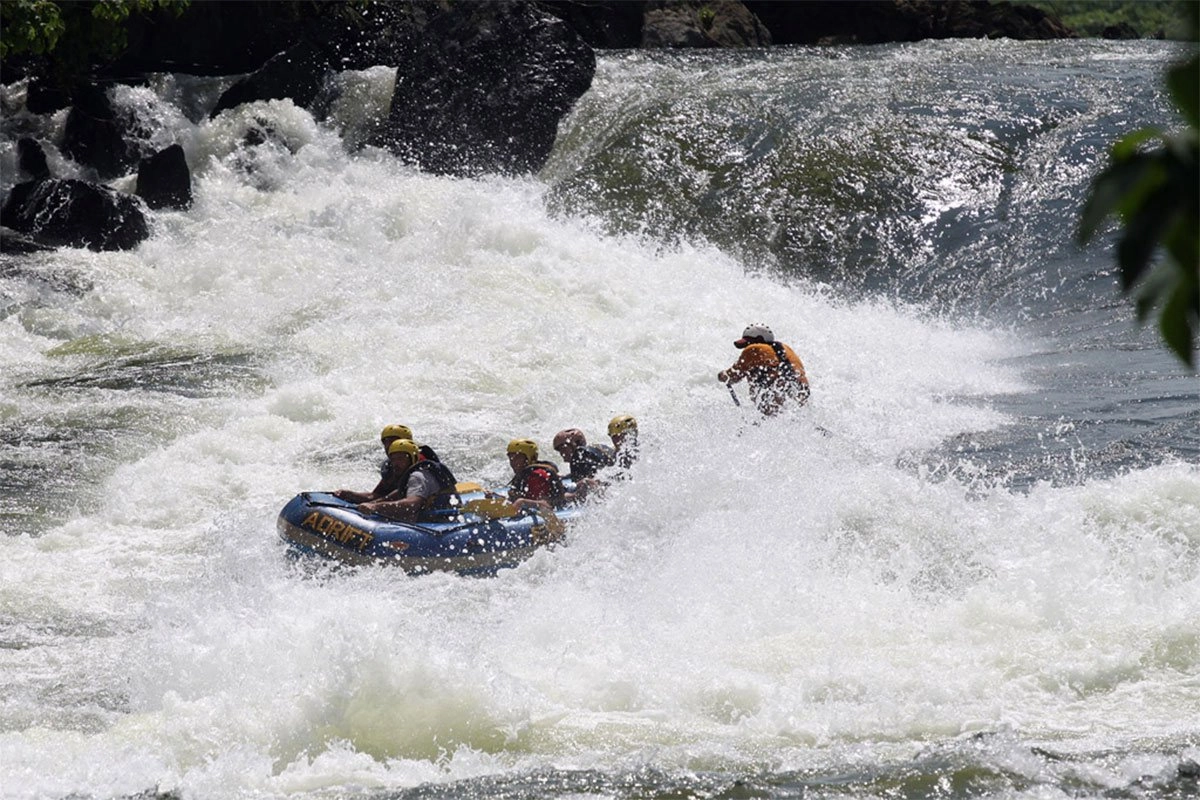
The Bad Place lives up to its ominous name with a reputation for violent flips and long, punishing swims. This Class V monster features multiple hydraulics—recirculating currents that trap and hold whatever falls into them. Guides approach with serious faces, briefing their crews multiple times on exactly what to do when, not if, things go wrong.
Dead Dutchman rapid offers a slightly less intimidating but still formidable Class IV challenge, while Vengeance combines technical difficulty with raw power. Between the major named rapids, dozens of smaller drops keep paddlers engaged, preventing any chance to relax or zone out.
Half-Day vs Full-Day: Choosing Your Adventure
Rafting companies offering tours in Jinja provide both half-day and full-day options, each delivering distinct experiences. Half-day trips typically cover the upper section, featuring excellent rapids including several Class IV and V drops while requiring less physical endurance. These trips suit travelers with limited time or those wanting a taste of Nile rafting without committing to eight hours on the water.
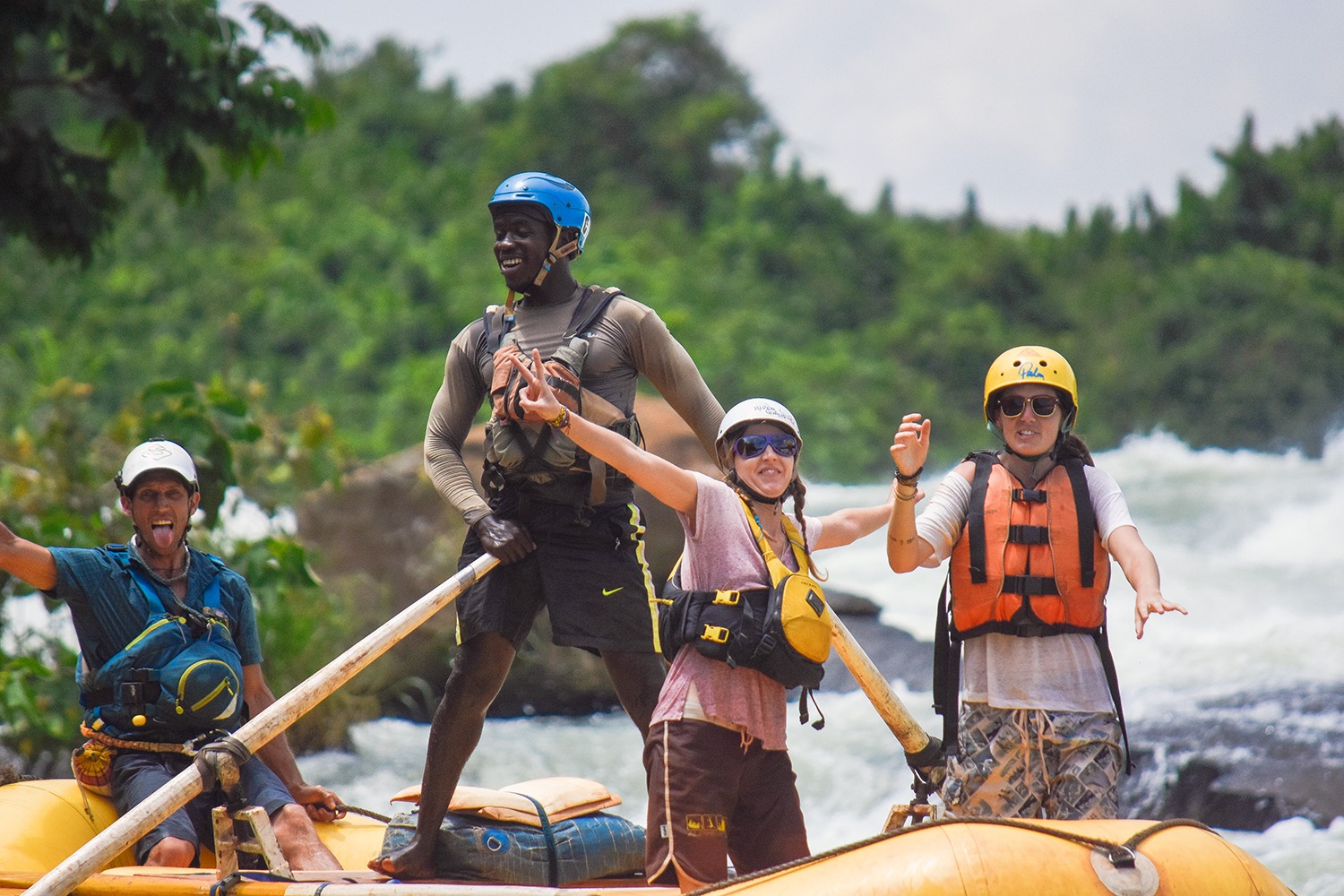
Full-day expeditions deliver the complete experience. Launching early morning, these trips progress through gradually intensifying rapids, building to the climactic encounters with the biggest drops in the afternoon. The extended time on the river creates camaraderie among raft crews, deepens the connection to the river environment, and provides opportunities to swim, cliff jump, and bodyboard through smaller rapids between the major sections.
Both options include comprehensive safety briefings, quality equipment, experienced guides, lunch (for full-day), and rescue kayakers who shadow each raft ready to assist swimmers. No previous rafting experience is required, though reasonable physical fitness and swimming ability are essential. The minimum age is typically 15 years, with some operators offering gentler family-friendly options on calmer sections.
Safety on Serious Water
White-water rafting carries inherent risks that cannot be eliminated, only managed. The Nile’s Class V rapids are genuinely dangerous, capable of holding swimmers underwater, slamming bodies against rocks, and testing even strong swimmers’ abilities. Commercial operators mitigate these risks through equipment, training, and protocols, but participants must approach the experience with appropriate respect.
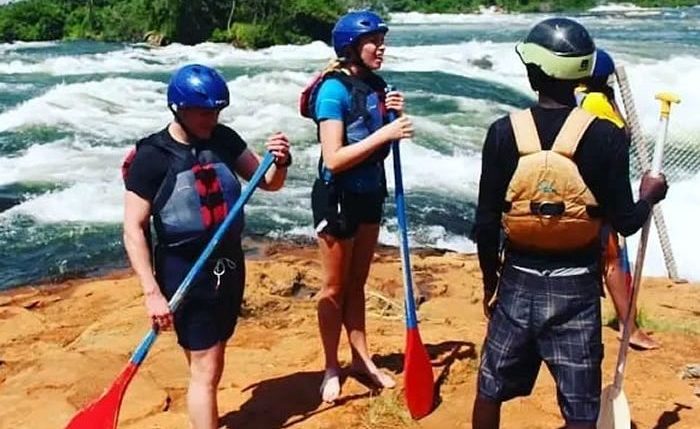
Quality operators provide internationally certified guides, commercial-grade rafts, properly fitted helmets and life jackets, and safety kayakers positioned to rescue swimmers quickly. Pre-trip briefings cover essential techniques: how to hold the paddle, when to paddle hard versus brace, what to do if you fall out, and how to help others back into the raft. Pay attention during these briefings. The information can prove critical when you’re suddenly swimming through a Class IV rapid, disoriented and fighting to reach the surface.
Choosing a reputable operator makes all the difference. Established companies like Adrift, Nile River Explorers, and Nalubale Rafting have operated for years, maintaining excellent safety records and investing in guide training and equipment maintenance. Cheaper operators may cut corners that matter. This is not the arena for budget shopping.
Beyond the Rapids
While white-water rafting stands as the centerpiece attraction, a well-rounded Jinja tour offers much more to satisfy adventure seekers. Bungee jumping from a platform suspended over the Nile provides another adrenaline fix, with a 44-meter free fall toward the river below. Kayaking courses allow paddlers to develop whitewater skills in the same rapids they rafted. Stand-up paddleboarding on calmer sections offers different perspectives on the river.
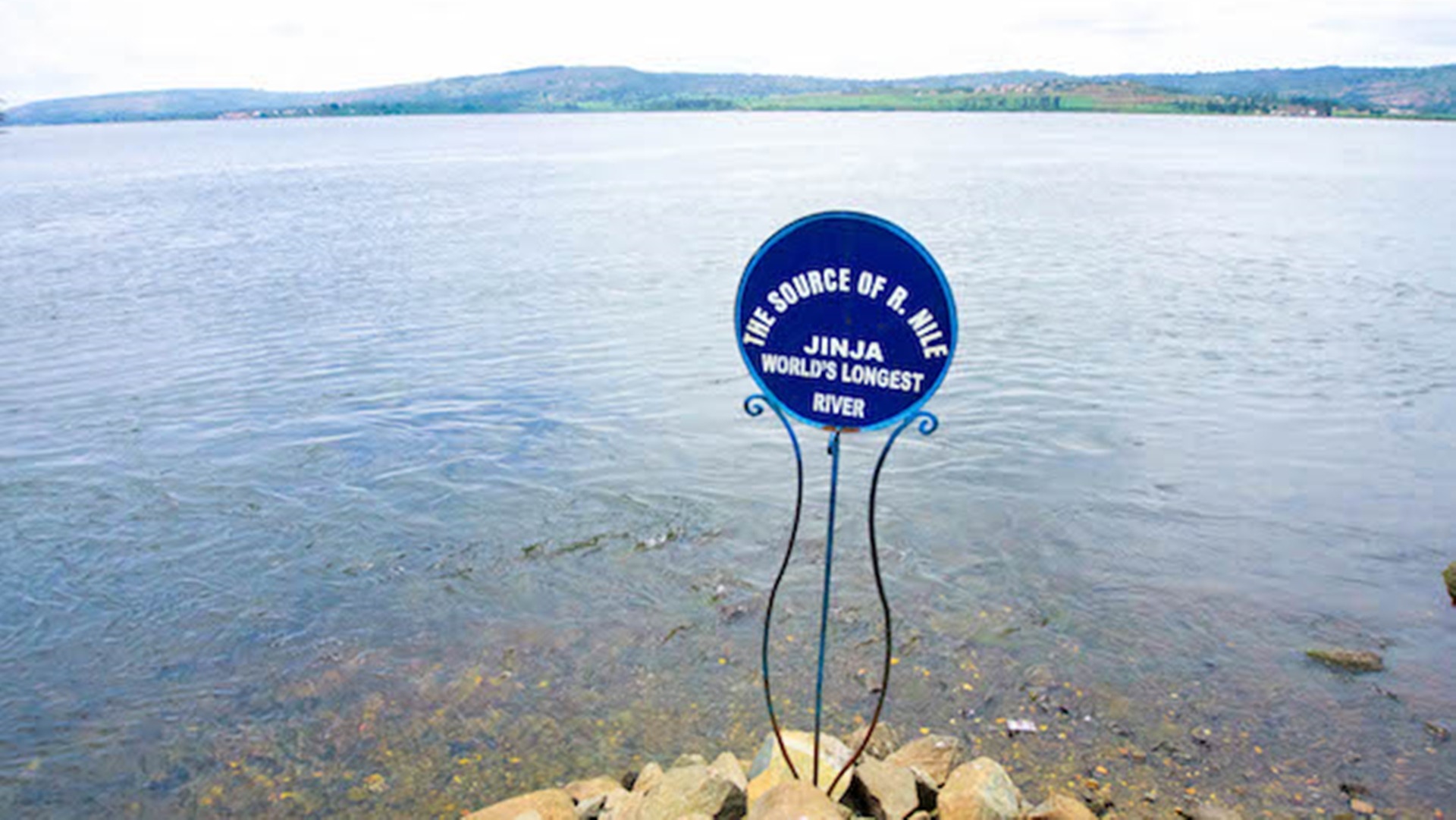
The town itself retains colonial-era charm mixed with backpacker energy. Cafes, bars, and restaurants cater to the constant influx of adventurers, creating a social scene where raft guides, kayakers, and travelers swap stories over Nile Special beers. Any self drive or guided tour in Jinja benefits from exploring the town’s vibrant social atmosphere, visiting the Source of the Nile monument, or taking sunset boat cruises on the calmer waters near Lake Victoria. Accommodation ranges from budget hostels to comfortable lodges overlooking the river, many designed specifically for adventure tourists seeking evening relaxation after daytime intensity.
When to Go
The Nile flows year-round, fed by Lake Victoria’s massive volume, making Jinja one of the few world-class rafting destinations accessible every month. Water levels fluctuate seasonally based on lake levels and dam releases, with higher flows from March to May and October to November creating bigger, more powerful rapids. Lower flows during drier periods from June to September and December to February make rapids slightly more technical but less violent.
Weather considerations matter less than in temperate climates. Uganda’s equatorial location means warm temperatures year-round, with rain possible any month but typically falling in short afternoon showers rather than all-day deluges. Even during rainy seasons, mornings often stay clear, and getting wet is part of rafting anyway.
Planning Your Rafting Adventure
Most visitors book their white water rafting experience as part of a broader Jinja tour package, though independent booking directly with operators is also straightforward. Transport from Kampala is easily arranged, with many rafting companies offering pickup services from the capital or nearby accommodations. The journey takes approximately 90 minutes along well-maintained roads, making Jinja accessible as either a day trip from Kampala or as a multi-day adventure base.
Tour operators typically handle all logistics, including equipment provision, meals, photos and videos of your run, and transfers between your accommodation and the river put-in point. This comprehensive service allows you to focus entirely on the experience rather than coordinating details. Many packages combine white water rafting with other activities, creating multi-day adventure itineraries that showcase everything Jinja offers.
The Experience That Stays With You
White-water rafting the Nile in Jinja transcends simple adventure tourism. There’s something primal about committing to a rapid you can hear roaring ahead, paddling hard on your guide’s commands as the raft accelerates toward chaos, then dropping into a wall of water that explodes over the bow and flips the raft like a toy. The sensation of tumbling underwater, lungs burning, orienting toward light and kicking for the surface, then emerging to see your raft upside down and crew scattered—these moments strip away everyday concerns and connect you to something elemental.
Successfully running the Nile’s biggest drops creates bonds between crew members who started as strangers. The shared challenge, mutual dependence, and collective triumph over powerful natural forces forge connections quickly. By day’s end, your random group of international travelers has become a team with shared stories and mutual respect.
The Nile has carried civilizations, inspired religions, and shaped continents. In Jinja, it offers something more immediate: the chance to test yourself against one of nature’s most powerful forces, to feel truly alive in moments of beautiful chaos, and to emerge exhausted, soaked, possibly bruised, and absolutely exhilarated. For adventurers seeking authentic thrills in spectacular settings, white-water rafting in Jinja delivers magnificently. Whether you’re planning a dedicated adventure-focused visit or incorporating rafting into a broader tour in Jinja, this experience will undoubtedly become the highlight of your Ugandan journey—a story you’ll retell for years and a benchmark against which all future adventures will be measured.
To book white water rafting tour to Jinja this season, simply contact us now by emailing to [email protected] or call us now on +256-700135510 to speak with the reservations team.