Self Drive to Queen Elizabeth National Park: Lions & Tips
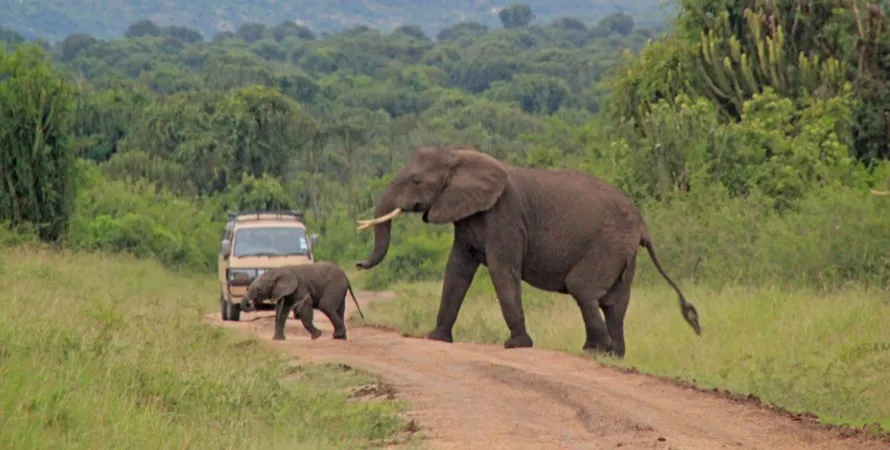
A self drive to Queen Elizabeth National Park lets you build your safari around the animals instead of a fixed schedule. You can leave at dawn for the Kasenyi plains, spend the afternoon on a boat cruise along the Kazinga Channel, and head south the next morning to look for the famous tree-climbing lions of Ishasha. The park is large and varied, and each area has its own road conditions, so it helps to plan before you set off.
This guide covers the routes by road from Kampala, what to see in each sector, and how to drive safely inside the park.
About Queen Elizabeth National Park

Queen Elizabeth National Park lies in western Uganda, between Lake George and Lake Edward. It is one of the country’s most popular parks because it combines savannah, wetlands, crater lakes and forest in one area. The Kazinga Channel, which links the two lakes, draws hippos, buffaloes, elephants and many water birds to its banks.
The park is usually explored in four main areas:
- Mweya Peninsula: the main hub, with lodges, a visitor centre and the starting point for boat cruises.
- Kasenyi plains: open grassland that is good for lions, Uganda kob and elephants.
- Kyambura Gorge: a forested gorge where you can track chimpanzees on foot.
- Ishasha sector: the quiet southern area known for tree-climbing lions.
Best routes for a self drive to Queen Elizabeth National Park
Route 1: Kampala to Mbarara to Katunguru
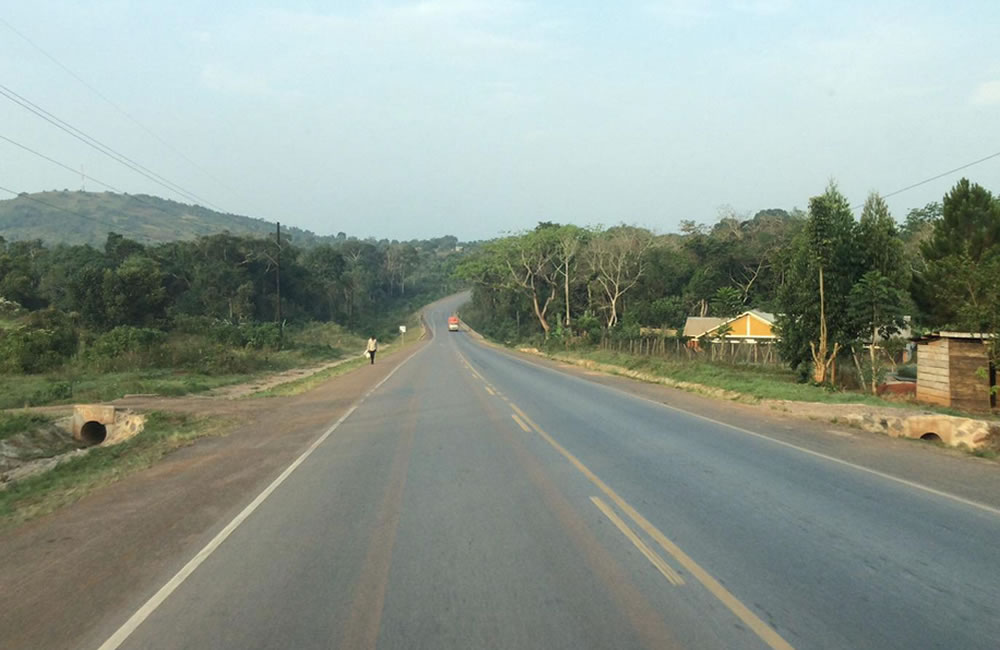
This is the most direct route to the Mweya area. You drive Kampala, Masaka, Mbarara, Bushenyi and Rubirizi, and then reach the Katunguru gate, which sits beside the Kazinga Channel. The road is tarmac for almost the whole way. Allow about 6 to 7 hours, plus stops. A good break on the way is the Equator crossing at Kayabwe, where you can take photos.
Route 2: Kampala to Fort Portal to Kasese
#image_title
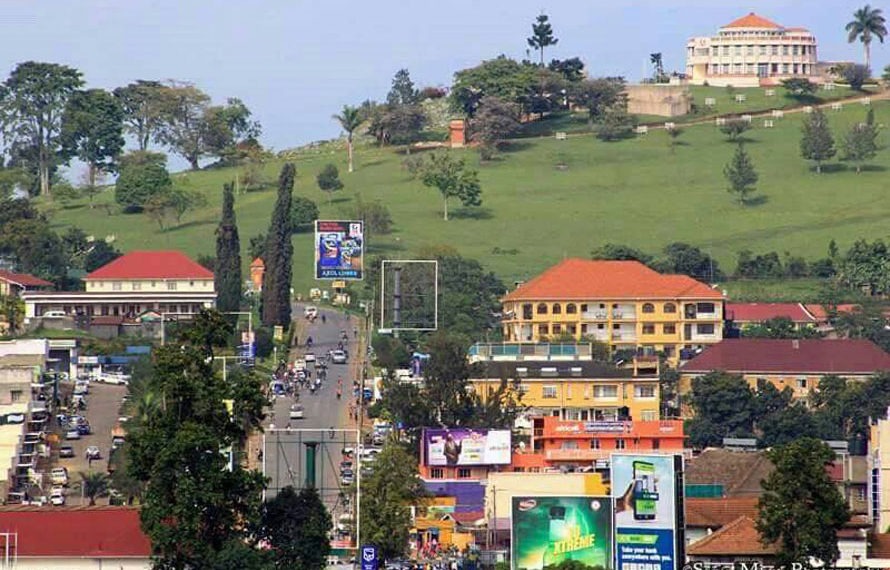
This route goes through Mubende and Fort Portal before dropping to Kasese and the park. It adds scenery, with tea estates, crater lakes and views of the Rwenzori Mountains. It suits travellers combining the park with Kibale Forest and chimpanzee trekking. See the Kibale self drive guide if you plan to include it.
Route 3: To Ishasha through Rukungiri
If your main goal is the tree-climbing lions, you can head to the southern sector through Mbarara and Rukungiri. This side of the park also connects naturally to Bwindi, so it fits a combined safari and gorilla trip.
Road conditions to expect
- Kampala to Mbarara and Katunguru: good tarmac, with speed bumps in trading centres and busy truck traffic.
- Inside the Mweya and Kasenyi areas: murram tracks that are comfortable in dry weather.
- Ishasha sector: rougher tracks that can become slippery after heavy rain.
- Rainy seasons (March to May and September to November): expect mud, so a 4×4 matters.
- Dry months (December to February and June to August): easier driving and animals gather near water, which makes wildlife viewing excellent.
Fuel up in Mbarara or Kasese before heading into the park, since fuel inside it is limited.
Tree-climbing lions in Ishasha
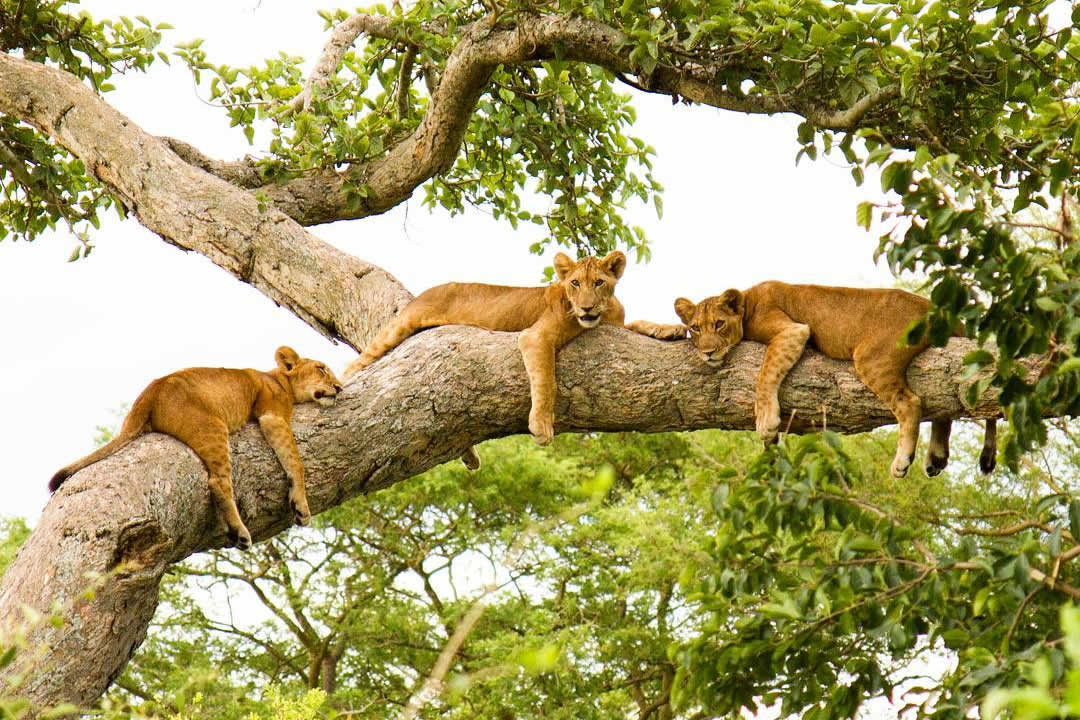
Ishasha is one of the few places in Africa where lions are regularly seen resting in trees. They usually lie on the branches of large fig trees during the heat of the day. Sightings are never guaranteed, but the best chances are in the morning and the early afternoon. Drive slowly, scan the branches, and be patient. Keep a safe distance and never leave your vehicle.
Kazinga Channel boat cruise
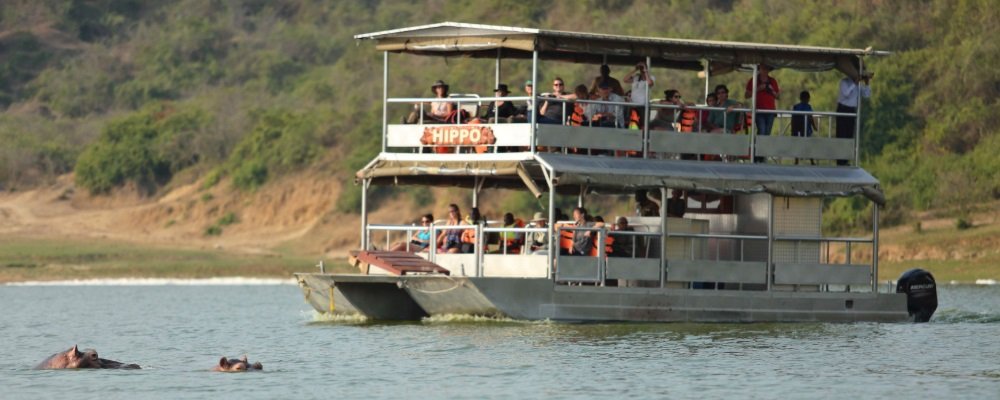
The boat trip from Mweya is one of the easiest ways to see wildlife at close range. The cruise usually lasts around two hours, and you can see hippos, buffaloes, elephants, crocodiles and many bird species from the water. It works well after a morning game drive, when the animals come to drink. Check the current schedule and prices at the park, as they can change.
Best vehicle for a self drive to Queen Elizabeth National Park
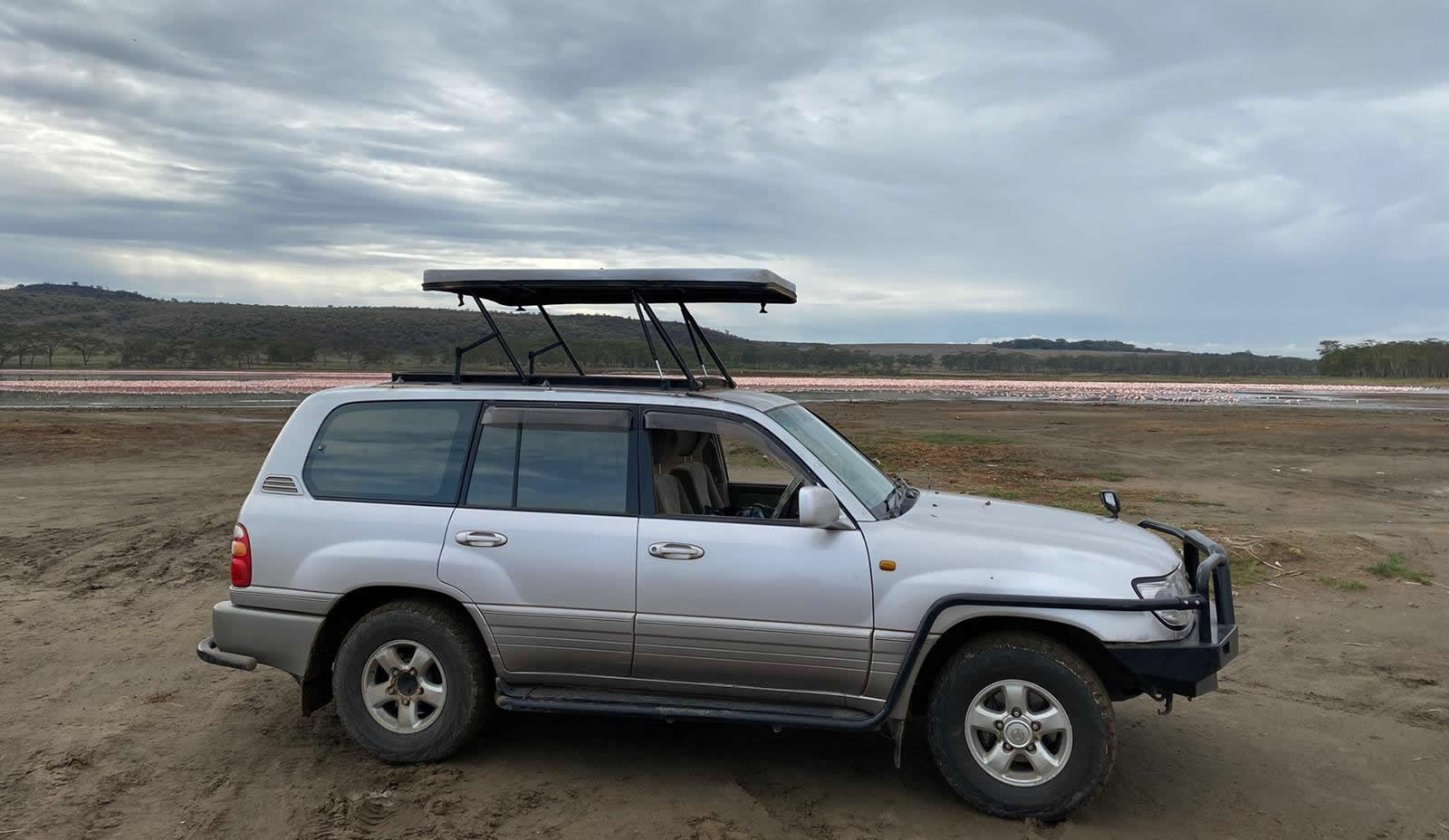
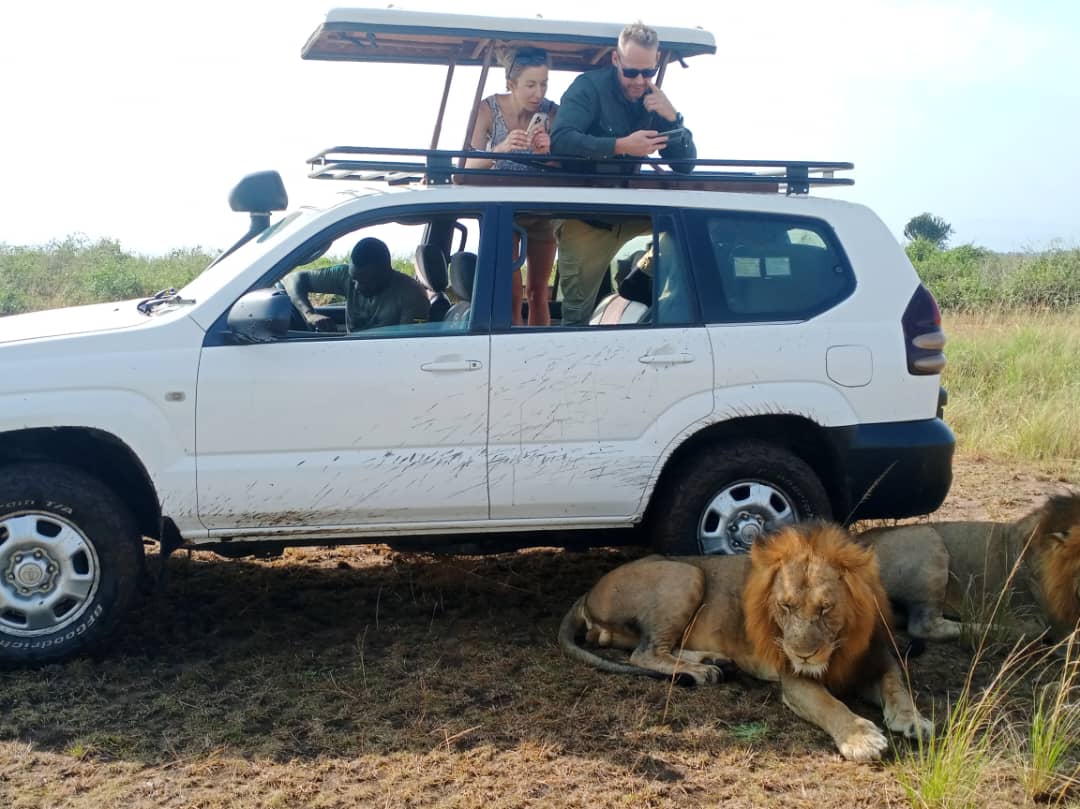
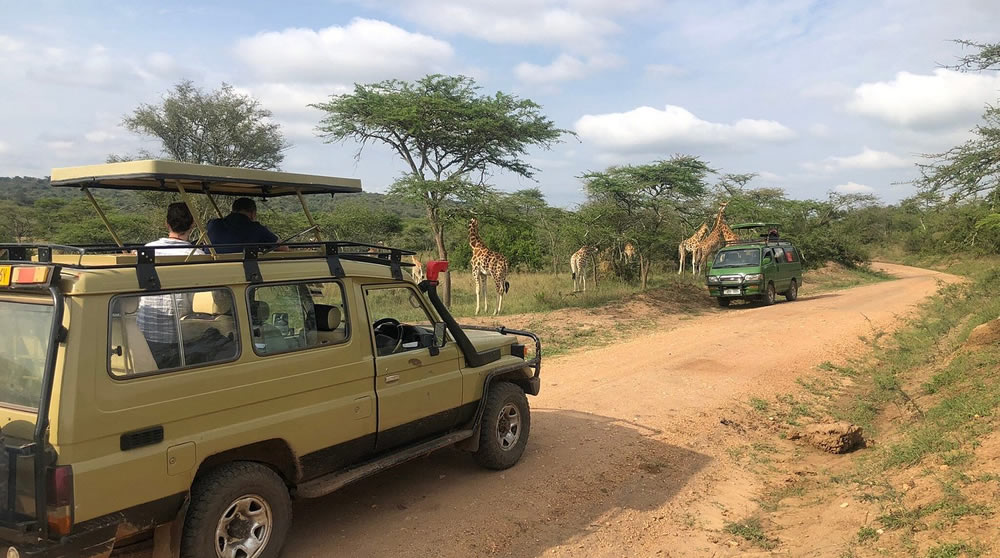
You need ground clearance for park tracks, and visibility matters for wildlife. A 4×4 such as the Land Cruiser Prado is a strong choice, and a pop-up roof Land Cruiser Prado gives you a standing view for game drives. At the time of writing, the pop-up roof vehicle is listed from US$120 per day with a driver, so ask about the options for self drive when you book.
A smaller SUV can handle the main tracks in dry weather, but it is a risk in the rainy seasons.
Driving tips inside the park
- Speed: stay within the posted speed limit, which is usually low, and slow down for animals on the track.
- Wildlife: keep your distance from elephants, buffaloes and lions, and never get out of the vehicle outside permitted areas.
- Timing: early morning and late afternoon give the best game viewing, and you should leave the park before dark.
- Navigation: carry offline maps, because signal is patchy.
- Paperwork: check the car rental requirements for licence and documents, and confirm park entry fees with the Uganda Wildlife Authority.
A simple 3-day plan
- Day 1: Drive from Kampala to the Mweya area and do an afternoon game drive.
- Day 2: Morning game drive on the Kasenyi plains, followed by the Kazinga Channel cruise.
- Day 3: Drive south to Ishasha for the tree-climbing lions, then continue to Bwindi or return to Kampala.
If you have extra time, add a chimpanzee trek in Kyambura Gorge.
Frequently asked questions
How long is the drive from Kampala?
Around 6 to 7 hours to the Mweya area, depending on traffic and stops.
Can I see tree-climbing lions on a self drive?
Yes, in the Ishasha sector, although sightings depend on luck and timing.
Do I need a 4×4?
It is recommended for the park tracks, especially in the rainy seasons and in Ishasha.
Is it better to hire a driver?
A driver-guide helps with spotting animals and navigation, but a self drive gives you more freedom.
Final thoughts
A self drive to Queen Elizabeth National Park gives you lions, elephants, hippos and a boat cruise in one trip, all at your own pace. Plan your route, choose a capable 4×4, drive carefully and give yourself enough time in each sector. When you are ready, contact us by sending an email to [email protected] or call us now on +256-700135510.