

Uganda Digital Nomads: Long Term Rentals for Remote Workers
A growing number of remote workers are trading crowded co-working hubs in Bali or Lisbon for something less expected: Kampala’s lakeside cafés, Entebbe’s quiet guesthouses, and weekend escapes to Lake Bunyonyi between video calls. Uganda isn’t yet a mainstream digital nomad destination, but that’s precisely part of its appeal — lower cost of living, a genuine culture to engage with rather than an expat bubble, and easy access to some of Africa’s most rewarding travel experiences on days off.
For remote workers staying for weeks or months, a practical question arises. Should they rent a car long-term, and how would that compare to a standard tourist rental?
Why Digital Nomads Consider Long-Term Rental
Uganda’s public transport — boda-bodas, matatus (shared minibus taxis), and ride-hailing apps in Kampala — works well for short trips and city living, and plenty of nomads get by without a car at all in the capital. But the calculation shifts for anyone planning to stay more than a few weeks, especially if remote work is combined with regular weekend travel.

digital nomad
A long-term rental removes the daily friction of negotiating boda-boda fares, waiting on ride-hailing availability outside the city center, and dealing with unpredictable matatu schedules for out-of-town trips. It also opens up spontaneous weekend travel — Jinja for whitewater rafting, Lake Mburo for a quick wildlife fix, or Sipi Falls for a change of scenery — without the planning overhead of arranging transport each time.
How Long-Term Rental Differs From a Tourist Booking
Standard safari rentals are built around short, intensive trips: a week or two covering specific parks, often bundled with a driver-guide and a fixed itinerary. Long-term rentals for remote workers look different in a few key ways:

Monthly rates instead of daily ones. Most rental companies offer meaningfully discounted monthly rates compared to adding up daily prices, since the vehicle isn’t being turned over between renters as frequently. It’s worth asking specifically about 30-day or long-term pricing rather than assuming the daily rate simply multiplies down.
Self-drive by default. Unlike short safari trips where a driver-guide is common (and often necessary for navigating parks and unfamiliar routes), digital nomads staying longer typically self-drive for daily life and reserve a driver-guide only for specific trips into national parks or unfamiliar rural areas.
A vehicle suited for daily use, not just safari routes. A rugged safari 4×4 is great for a two-week trip through Murchison Falls, but for daily use in Kampala traffic and city parking, a smaller SUV or sedan is often more practical and fuel-efficient, with a 4×4 reserved separately for weekend trips upcountry.
Maintenance and support expectations. Over a month or more, ordinary wear and tear becomes relevant in a way it isn’t for a two-week trip. It’s worth confirming upfront how routine maintenance, tire issues, or breakdowns are handled during an extended rental, and whether the rental company offers swap-out vehicles if something needs servicing.
Practical Considerations for Remote Workers
Connectivity for work, not just travel. Renting a car in Uganda doesn’t solve your work-from-anywhere setup, but it does expand where “anywhere” can realistically be. Areas with reliable 4G coverage extend well beyond Kampala and Entebbe, and having your own vehicle makes it far easier to relocate for a week to a quieter, cheaper town without losing mobility once you’re there.
Parking and security in Kampala. Unlike smaller towns, Kampala requires more thought around secure parking, particularly overnight. Many guesthouses and serviced apartments popular with remote workers offer secure parking, but it’s worth confirming before booking accommodation if you’ll have a rental car with you.
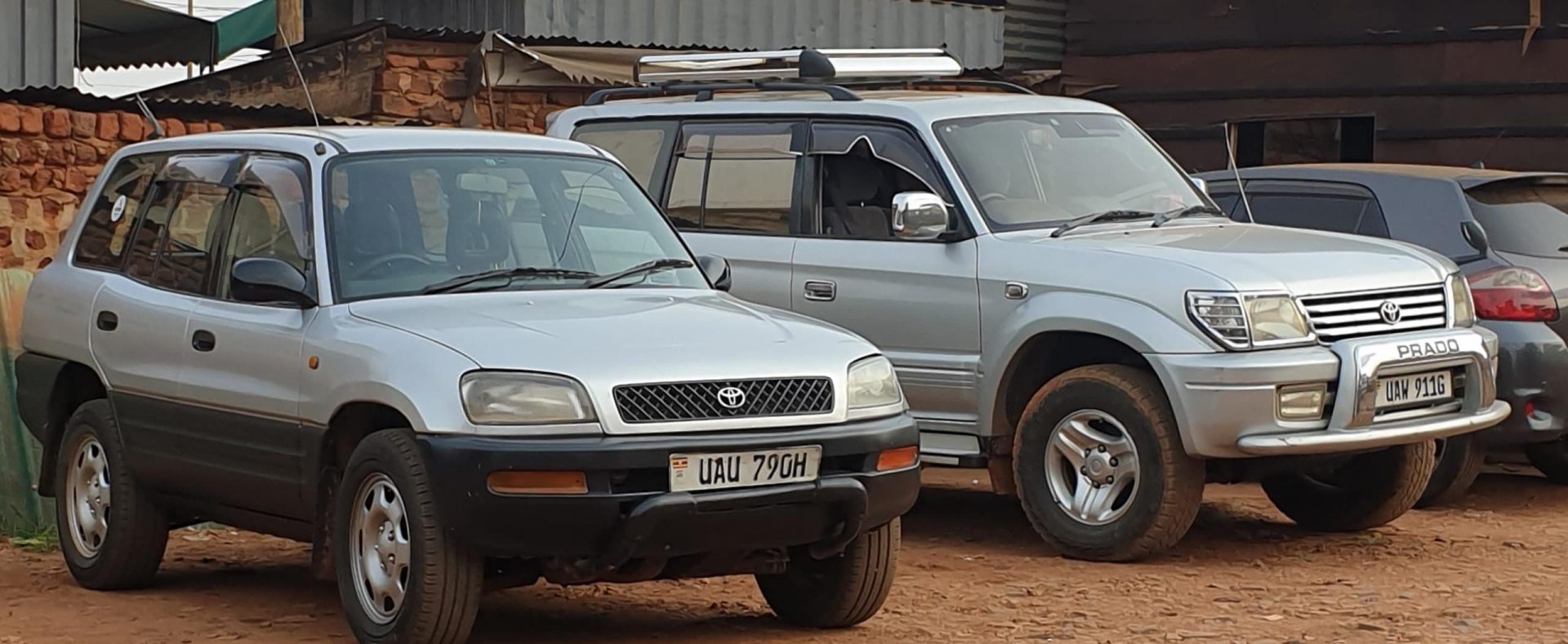
Rental cars being parked in Uganda
Insurance for extended stays. Standard short-term rental insurance usually covers the basics, but it’s worth double-checking coverage terms specifically for long-term rentals, especially if your trip includes both city driving and rougher upcountry roads on weekend trips.
Fuel costs add up differently over a month. A month of regular local driving, plus a few weekend trips, adds up to a meaningfully different fuel budget than a two-week safari itinerary. Factoring this into your monthly cost comparison — rather than just the rental rate — gives a more accurate picture of what long-term car access actually costs.
Flexibility to swap vehicles. Some long-term renters start with a smaller, city-friendly car and later swap to a 4×4 for a specific national park trip, then swap back. It’s worth asking rental companies whether this kind of mid-rental flexibility is available, since it can be more cost-effective than renting a 4×4 for the entire month just for a handful of upcountry days.
Making Uganda Work as a Base
For remote workers weighing where to spend the next few months, Uganda offers a combination that’s hard to find elsewhere: genuinely low cost of living, a real sense of place rather than a curated expat scene, and weekend access to gorilla trekking, whitewater rafting, and some of Africa’s most rewarding wildlife parks — all without needing to fly anywhere. A long-term rental car in Uganda is often the single change that makes that combination practical day-to-day, turning Uganda from an interesting stopover into a genuinely workable base.
Are you a digital nomad planning to rent a car in Uganda for lon-term period- we at Mumwe Safaris will be more than happy to get you an affordable and reliable vehicle- Contact us now by sending an email to [email protected] or call +256-700135510.


