7 Things No One Tells You About Meeting a Silverback Gorilla
You’ve done everything right. You booked months in advance, paid for the permit, hired a reputable tour operator, and laced up your hiking boots. You’ve read the guidelines, watched the documentaries, and told everyone you know that you’re going gorilla trekking in Uganda or Rwanda. But here’s the truth that almost no one warns you about: nothing — absolutely nothing — can prepare you for the moment you step into a forest clearing and find yourself face to face with a silverback mountain gorilla.
This is not just wildlife watching. Gorilla trekking is one of the most psychologically and emotionally profound experiences a human being can have. And there are things about it that guidebooks consistently fail to mention.
Here are seven of them.
1. The Silence Hits You Before He Does
Every trekker expects the gorillas to be loud — chest-beating, branch-crashing, Hollywood-style. What they don’t expect is the silence.
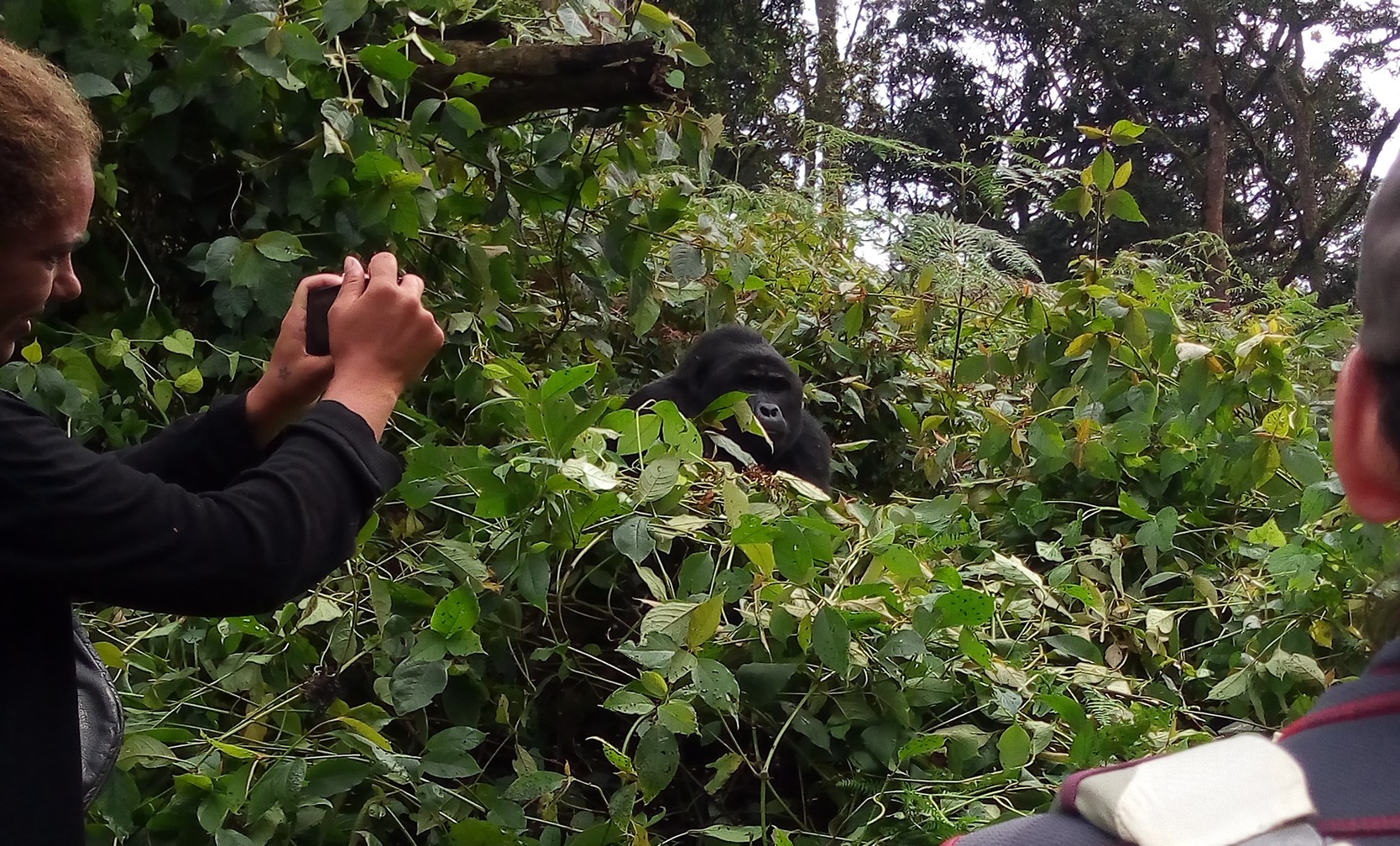
When you are close to a habituated gorilla family, the forest goes extraordinarily quiet. Your guide signals the group to stop. And then, through the undergrowth, you simply see him. Not dramatic. Not announced. Just… there. A mass of black fur and ancient muscle, utterly at ease in his world.
That silence is not empty. It is dense with presence. The silverback is not performing for you. He is simply being, and you are the one who has entered his reality. Many trekkers later describe this moment as the one that made them forget to breathe.
2. Your Body Reacts in Ways Your Brain Doesn’t Expect
Guides will tell you to stay calm. And you will genuinely intend to. But your nervous system has its own agenda.
When a 180-kilogram silverback shifts his weight and glances in your direction, something ancient fires in your brain — a primal recognition that you are in the presence of something far more powerful than yourself. Your heart rate spikes. Your palms go cold. Some people find themselves inexplicably close to tears. Others feel a strange, overwhelming stillness, like the world has narrowed to a single point.
This is not fear in the ordinary sense. It is something older. Primatologists sometimes describe it as a form of awe — the same feeling humans likely experienced for most of our evolutionary history when sharing landscapes with great apes. Your body, it turns out, remembers.
3. The Hour Goes By in About Four Minutes
You are given exactly one hour with the gorilla family. One hour feels generous when you read it in a brochure. In the forest, it evaporates.
The permit rules are strict for good reason — limiting human contact protects the gorillas from disease and stress. But no amount of logical understanding prepares you for how brutally fast that hour disappears. You spend the first ten minutes simply absorbing the reality of what you’re seeing. Then a juvenile does something extraordinary — rolls down a slope, hangs from a vine, reaches toward your boot — and suddenly the guide is tapping your shoulder.
Almost every trekker says the same thing on the walk back: “That wasn’t an hour.” It was. Time just works differently in the presence of a silverback.
4. He Knows You’re There — and He’s Made His Peace With It
There is a common misconception that habituated gorillas are tame, or somehow unaware of the distinction between humans and their natural world. They are neither.
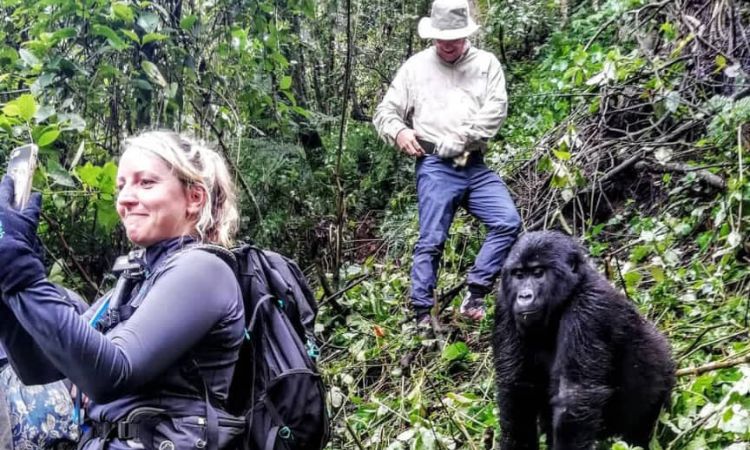
A habituated silverback knows exactly what you are. Researchers and rangers have spent years slowly, carefully acclimatizing these families to human presence — a process that takes up to three years of daily, patient contact before a group is deemed safe for tourism. The silverback has assessed you. He has considered the group of wide-eyed strangers standing at the edge of his family’s resting spot, and he has decided, in his own time, that you are tolerable.
That quiet tolerance is not indifference. It is a conscious, ongoing negotiation. When he yawns — showing teeth the size of your thumb — he is reminding you of the terms.
5. The Juveniles Will Absolutely Try to Touch You
The silverback is majestic and commanding. The juveniles are chaotic and utterly without boundaries.
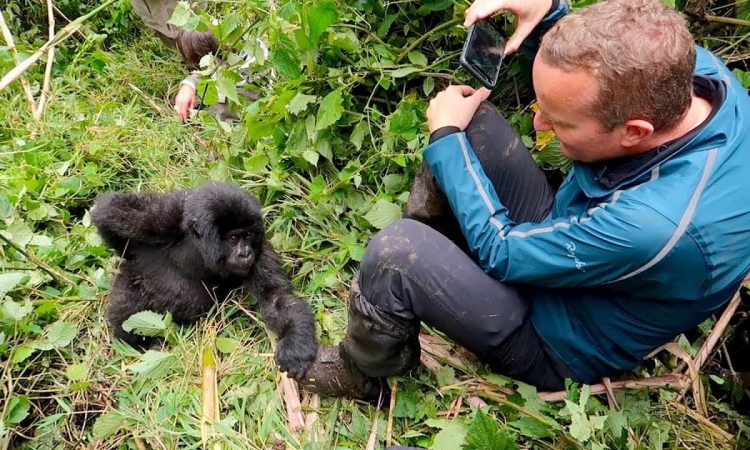
Young gorillas are intensely curious about human visitors, and despite your guide’s best efforts to keep the group moving, a juvenile will almost certainly break protocol. They dart toward boots, grab at trouser legs, and sometimes barrel straight into trekkers who are too stunned to step aside. Guides will usher them away gently — direct interaction is discouraged to preserve the gorillas’ wildness — but the juveniles rarely get the memo.
If one does make contact with you, you will likely find it impossible not to laugh. And then immediately feel guilty for laughing. And then realize that this small creature, with its curious dark eyes and clumsy hands, shares approximately 98.3% of your DNA. That particular statistic lands very differently when someone is trying to untie your shoelaces.
6. The Silverback May Charge — and You Must Not Run
This is the one the guides do tell you about. But hearing it and experiencing it are entirely different things.
A silverback may occasionally perform what is known as a mock charge — a rapid, thunderous advance designed to assert dominance and test the intentions of whoever has unsettled him. It involves vocalization, ground-slapping, and the full terrifying spectacle of 180 kilograms of pure muscle moving directly toward you at speed.
The instruction is simple: do not run. Crouch down, avoid direct eye contact, and remain still. Running triggers a chase response. Stillness communicates submission.
Simple in theory. In practice, every human instinct you possess will scream at you to flee. The trekkers who have faced a mock charge describe the moment of choosing to stay still as one of the hardest things they have ever done — and one of the most extraordinary. Because after a few seconds, he stops. He has made his point. He turns away. And you realize, shaking slightly, that you just held your ground with a silverback. He respected that.
7. You Will Leave a Different Person Than You Arrived
This is the thing that no one tells you because it sounds dramatic. But ask anyone who has done it.
Something shifts during that hour in the forest. It is difficult to articulate and easy to dismiss until it happens to you. When you look into the eyes of a silverback — really look, not just observe — there is a recognition that crosses the distance between species. Not a human recognition. Something deeper and older than that. The sense that consciousness, in some form, is looking back at you.
Many trekkers describe returning to their lodges in a kind of quiet daze. Some find themselves reassessing priorities they had held for years. Others become committed conservationists on the spot, redirecting careers or donations in ways they never anticipated. Almost all of them say the same thing when asked to describe the experience.
“I don’t have the words for it.”
A Note on Conservation
Mountain gorillas are one of the very few large mammal species whose population is actually increasing. As of the most recent surveys, there are just over 1,000 mountain gorillas remaining in the wild, found only in the Virunga Massif — spanning Uganda, Rwanda, and the Democratic Republic of Congo — and in Bwindi Impenetrable National Park in Uganda.
Gorilla trekking permits, which range from $700 in Uganda to $1,500 in Rwanda, are among the most direct conservation funding mechanisms in the world. A significant portion goes directly to habitat protection, ranger salaries, veterinary care, and community development programs that give local people a financial stake in the gorillas’ survival.
When you buy that permit, you are not just buying an experience. You are, in a very tangible way, helping to ensure that future generations of humans — and gorillas — will have the chance to look into each other’s eyes in a forest clearing, and feel whatever extraordinary thing it is that passes between them.
Before You Go: Essential Tips
- Book your permit early. Permits sell out months in advance, particularly for Bwindi and Volcanoes National Park in Rwanda.
- Train for the trek. Depending on where the gorillas have roamed, hikes can last anywhere from 30 minutes to eight hours of steep, muddy terrain.
- Dress appropriately. Long sleeves, long trousers, waterproof boots, and gardening gloves to protect your hands from stinging nettles.
- Leave the strong scents behind. Gorillas are highly sensitive to smell. Skip the perfume, cologne, and heavily scented sunscreen.
- Follow your guide absolutely. They know these animals. Their instructions are not suggestions.
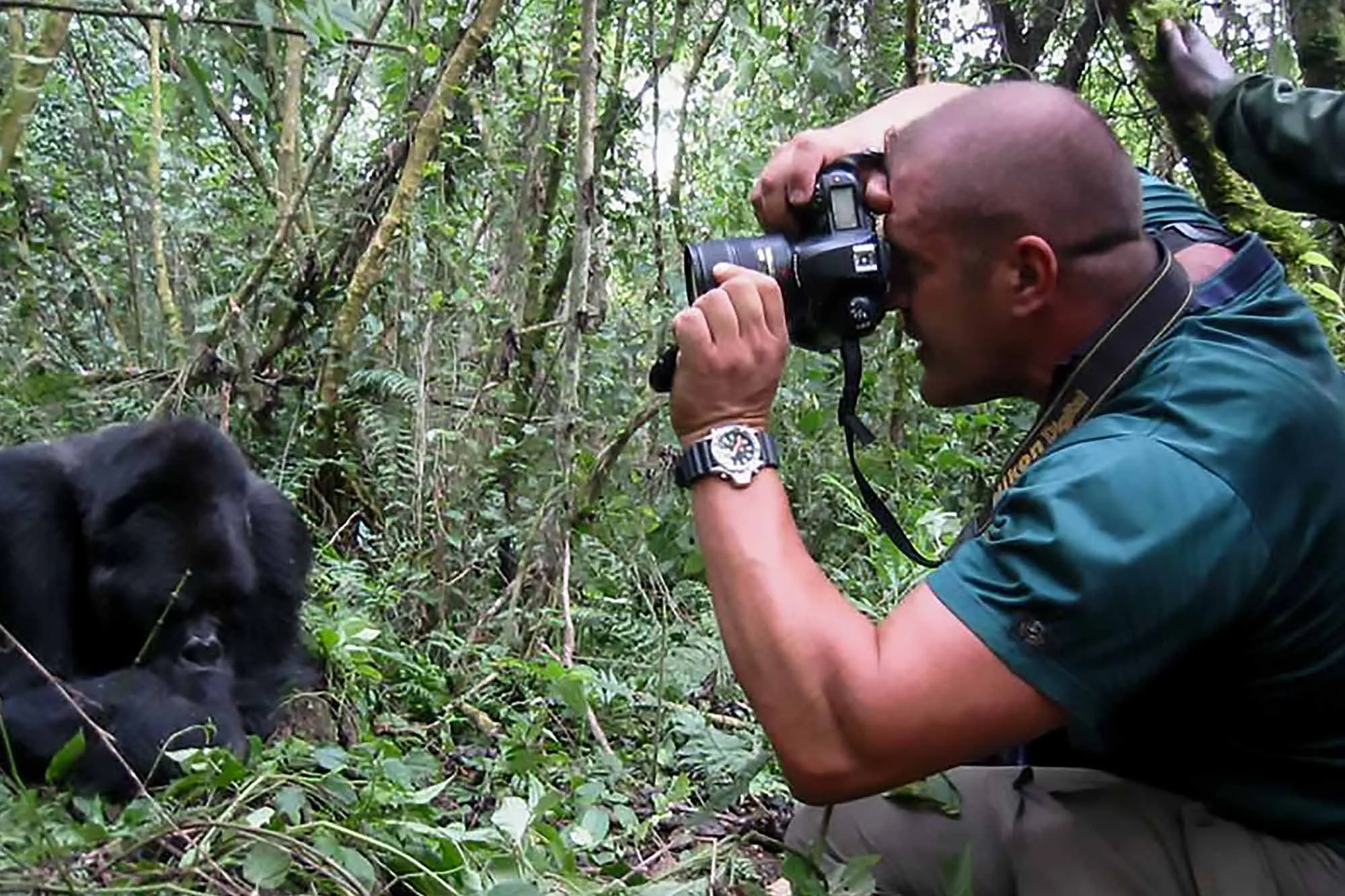
- Put the camera down occasionally. The instinct to document everything is understandable — but some moments deserve your full, undivided presence.
The silverback does not know your name, your job title, or your anxieties. For one hour, in a forest older than memory, none of that exists. Just you, him, and the oldest conversation on Earth — conducted entirely in silence.
PLanning to visit Uganda or Rwanda for gorilla trekking adventure in 2026, simply contact us now by sending an email to [email protected] or calling +256-700135510 to speak with the reservations team.